
In the early 1900s, professional baseball was becoming America’s national pastime, and one family in Tuscumbia, Alabama, was particularly enthusiastic about the game.
George and Catherine Manush raised eight children (seven sons and one daughter) in their home at 1005 East Third Street. Of the seven boys, at least five would go on to play professional baseball, with some accounts placing the number at six.
Two eventually reached the major leagues, and the youngest became one of the greatest hitters of his generation.
A German immigrant and his baseball-playing sons
George Manush, the family patriarch, immigrated to the United States from Germany in the late 1800s. He worked as a carpenter and cabinetmaker, including employment with a railroad company. His wife, Catherine Rita Carls Manush, was born in Wisconsin to German immigrant parents.
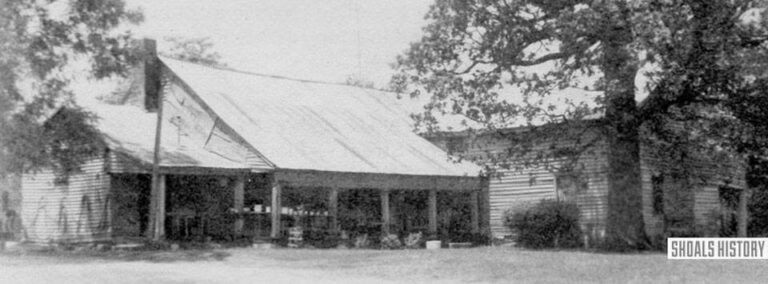
In 1885, George built the family’s home on East Third Street in Tuscumbia. The house would become the childhood home of several future professional ballplayers. Among the sons were Frank, George Henry, Harry, Ernie, and the youngest, Henry Emmett, better known as “Heinie.”
The brothers grew up during an era when baseball was rapidly expanding beyond its major eastern cities. Smaller communities formed local clubs, while minor leagues offered talented young players an opportunity to pursue professional careers. For the Manush family, baseball became something of a family tradition.
Frank Manush: The first brother to reach the major leagues
Frank Henry Benjamin Manush was born in Tuscumbia on September 18, 1883.
A third baseman, Frank played professionally in the minor leagues before earning an opportunity with the Philadelphia Athletics in 1908.
He made his Major League Baseball debut on August 31, 1908, against the New York Highlanders, the team now known as the New York Yankees.
His major-league career was brief. Frank appeared in 23 games for Philadelphia that season, collecting 12 hits in 77 at-bats for a .156 batting average.
Although he never returned to the majors, Frank continued playing professionally and later managed minor-league clubs. His minor-league career extended into 1921.
Frank’s greatest influence on baseball history, however, may have occurred when he returned home to Tuscumbia in 1908. His youngest brother, Heinie, was only seven years old.
Years later, Heinie recalled his fascination with the baseball uniforms and equipment that Frank brought home. Seeing his older brother’s gear helped inspire his own ambition to become a professional player.
George Henry Manush: The brother pictured on a tobacco card
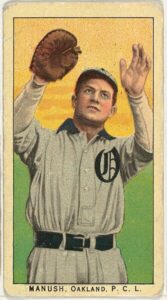
Another Tuscumbia-born brother, George Henry Manush, entered professional baseball in 1906.
Born April 5, 1885, George became an outfielder and spent approximately a decade playing for minor-league teams across the country.
His clubs included the Memphis Egyptians, Mobile Sea Gulls, Milwaukee Brewers, Burlington Pathfinders, Rock Island Islanders, and several others.
In 1910, George played for the Rock Island Islanders of the Illinois-Indiana-Iowa League. He recorded 159 hits in 143 games and finished the season batting .300.
He also had a connection to the Oakland Oaks of the Pacific Coast League, documented in contemporary newspaper reports. On March 13, 1910, the Oregon Daily Journal included Manush among new players associated with Oakland.
Then, on February 13, 1911, the Morning Oregonian reported that Oakland manager Harry Wolverton had sold outfielder George H. Manush to the Wilkes-Barre club of the New York State League. These newspaper accounts provide an important clue to an unusual piece of baseball memorabilia.
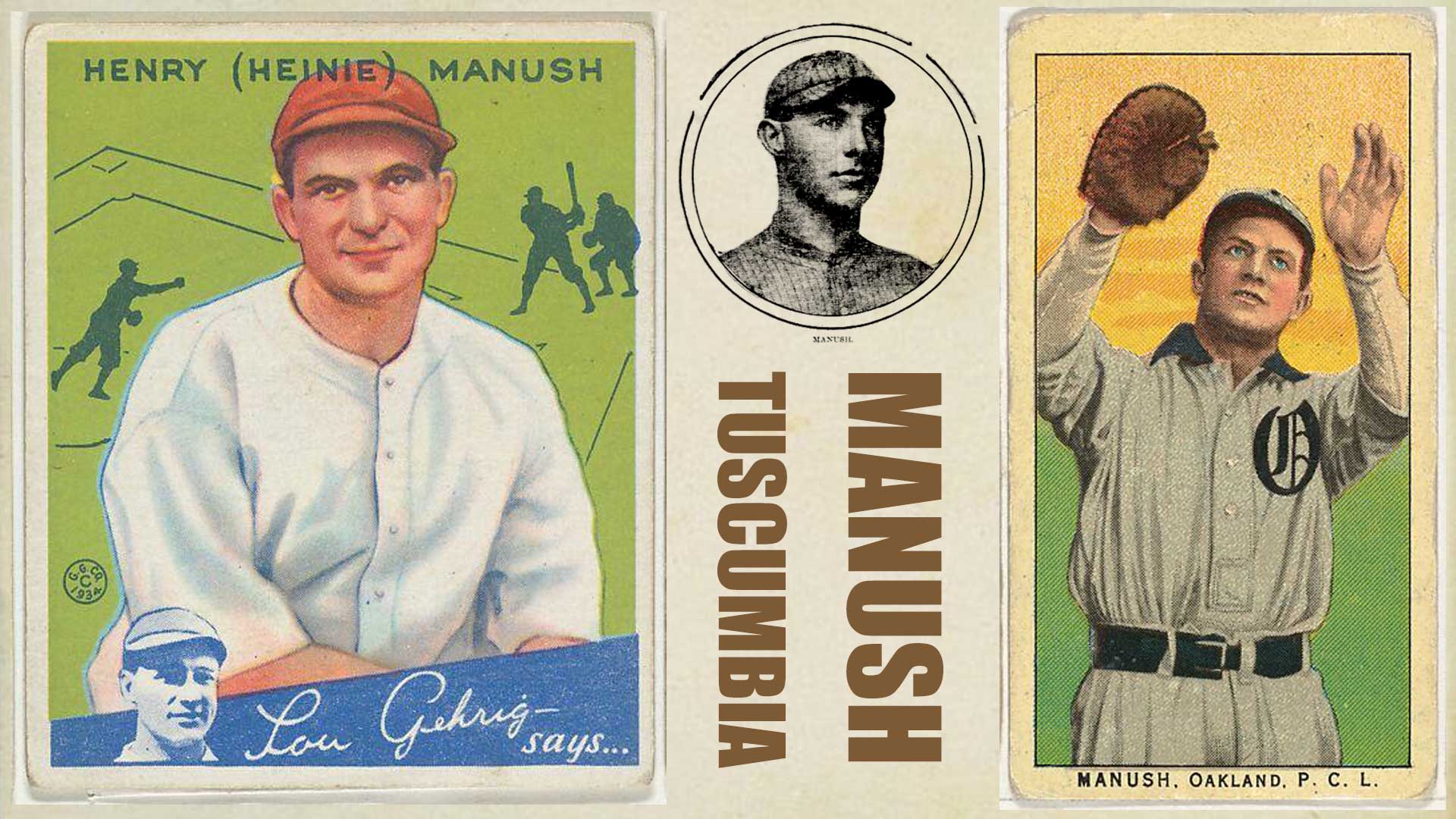
In 1910, the American Tobacco Company issued a series of colorful baseball trading cards advertising Obak Mouthpiece Cigarettes. One of those cards depicted a player identified simply as “Manush” of Oakland. An original example survives in the collection of the Metropolitan Museum of Art in New York.
The card’s precise identification has long been uncertain because George does not appear in conventional Oakland regular-season statistics for 1910. However, contemporary reports confirm his association with Oakland during the same period. Taken together, the evidence strongly suggests that the card depicts George Henry Manush of Tuscumbia.
George later became a player-manager, leading clubs including the Keokuk Indians, Burlington Pathfinders, and Clinton Pilots.
George died on January 11, 1923, at just 37 years of age.
The other baseball-playing Manush brothers
The Manush family’s involvement in baseball extended beyond Frank and George. Historical accounts identify other brothers, including Harry and Ernie, as having connections to professional baseball.
However, surviving records are less complete concerning their individual careers.
Some accounts state that six of the family’s seven sons played professional baseball, while a historical marker in Tuscumbia identifies five as having participated in organized baseball.
Despite the differing totals, the central fact remains remarkable: numerous sons from the same Tuscumbia household pursued careers in the sport, including two who reached the major leagues.
Heinie Manush: From Tuscumbia to the Hall of Fame
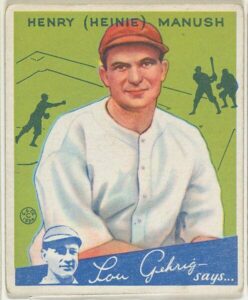
The youngest Manush son would achieve a level of success that none of his older brothers reached.
Henry Emmett “Heinie” Manush was born at the family home in Tuscumbia on July 20, 1901.
He attended Tuscumbia High School before transferring to Massey Military Academy in Tennessee. After completing his education, he traveled to Burlington, Iowa, where he worked for his brother George’s plumbing business.
He later moved west and began playing baseball professionally. After successful seasons in the minor leagues, Heinie made his major-league debut with the Detroit Tigers on April 20, 1923.
In Detroit, he played alongside two of baseball’s greatest hitters, Ty Cobb and Harry Heilmann. Heinie quickly developed a reputation as an exceptional hitter.
In 1926, he won the American League batting championship with a .378 batting average, finishing ahead of Babe Ruth.
He later played for the St. Louis Browns, Washington Senators, Boston Red Sox, Brooklyn Dodgers, and Pittsburgh Pirates.
During his major-league career, which extended through 1939, Heinie accumulated 2,524 hits, 110 home runs, and 1,183 runs batted in, with a lifetime batting average of .330.
In 1964, he was inducted into the National Baseball Hall of Fame in Cooperstown, New York. The boy who had once admired his older brother’s baseball uniform had become one of the game’s all-time greats.
A baseball dynasty in Tuscumbia
Although the Manush brothers eventually traveled across the country in pursuit of baseball careers, their origins remain firmly connected to Tuscumbia. The city has commemorated its famous native son in several ways.
Tuscumbia’s high school baseball field was named in Heinie Manush’s honor in 2002. The field was rededicated in 2011, and the community held Heinie Manush Day celebrations in April 2021. A historical marker near the family home also recognizes his achievements.
Sources
- Eric J. Sterling, “Heinie Manush,” Encyclopedia of Alabama, updated July 30, 2026. https://encyclopediaofalabama.org/article/heinie-manush/
- Dan D’Addona, “Heinie Manush,” Society for American Baseball Research, 2012. https://sabr.org/bioproj/person/heinie-manush/
- Baseball-Reference, “Frank Manush.” https://www.baseball-reference.com/players/m/manusfr01.shtml
- Baseball-Reference, “Heinie Manush.” https://www.baseball-reference.com/players/m/manushe01.shtml
- StatsCrew, “George Manush Minor League Baseball Statistics.” https://www.statscrew.com/minorbaseball/stats/p-48f02d26
- Oregon Daily Journal, March 13, 1910, page 40. https://oregonnews.uoregon.edu/lccn/sn85042444/1910-03-13/ed-1/seq-40/
- Morning Oregonian, February 13, 1911, page 10. https://oregonnews.uoregon.edu/lccn/sn83025138/1911-02-13/ed-1/seq-10/
- Metropolitan Museum of Art, “Manush, Oakland,” 1910 Obak Baseball Players T212 card, accession 63.350.246.212.94. https://www.metmuseum.org/art/collection/search/433596
- Historical Marker Database, “Henry Emmett (Heinie) Manush.” https://www.hmdb.org/m.asp?m=312406
- Baseball History Comes Alive, “We’re Contacted by Family Relations of Hall-of-Famer Heinie Manush!” https://www.baseballhistorycomesalive.com/we-contacted-by-family-relations-of-hall-of-famer-heine-manush/