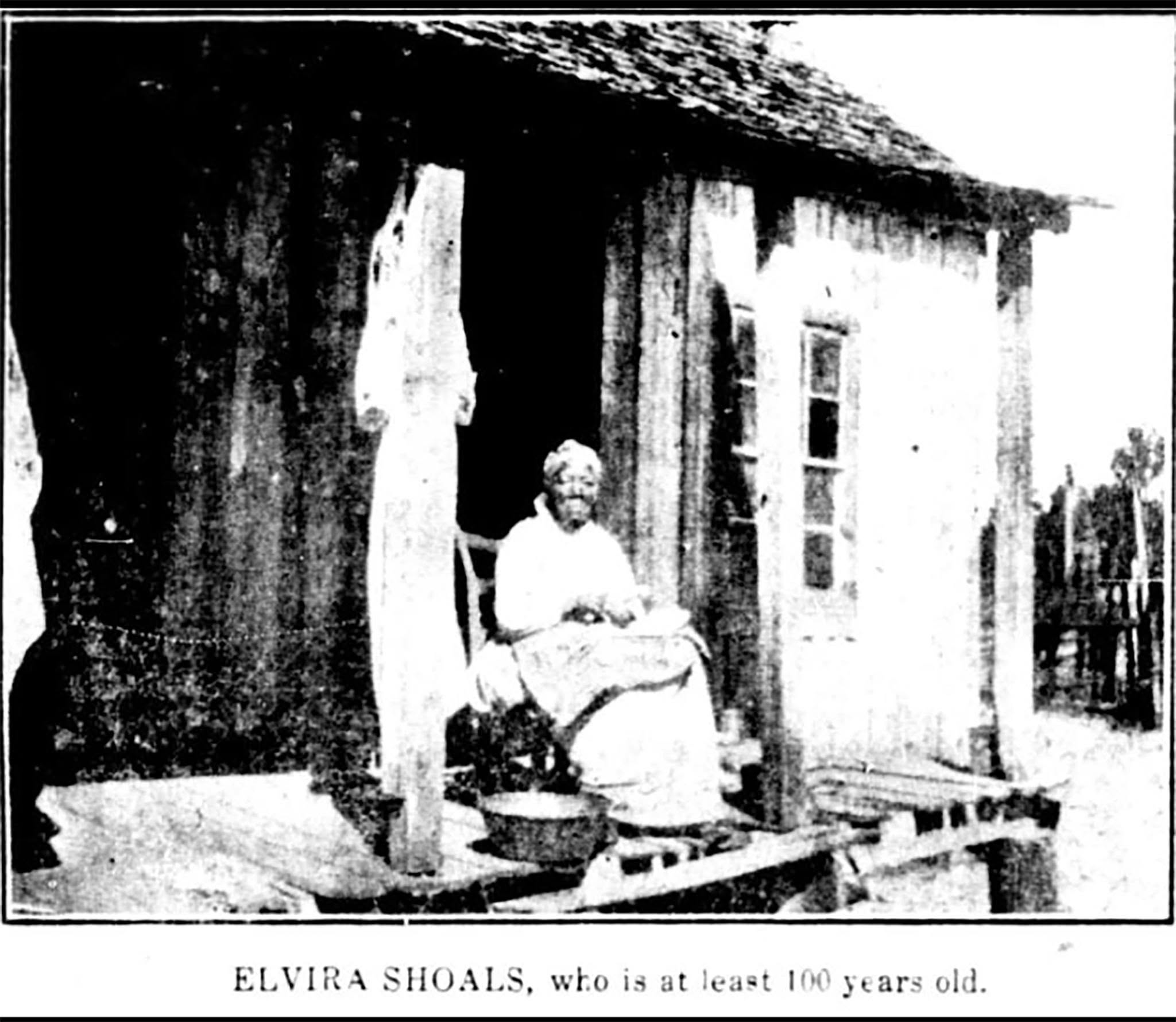

In January 1917, an elderly African American woman named Elvira Shoals sat on the porch of her small Oklahoma home and recalled a life that had begun nearly a century earlier near Tuscumbia, Alabama.
Born into slavery around 1817, Elvira had been enslaved by George Colbert, a prominent Chickasaw leader whose family operated a ferry across the Tennessee River. She was taken west during the Chickasaw removal of the 1830s, survived the Civil War, and eventually gained her freedom.
Her remarkable story survives through an interview published in the McCurtain Gazette on January 13, 1917.
Growing Up Near Tuscumbia
Elvira told interviewer Captain W. S. Ray that she had been raised below Tuscumbia, near the Tennessee River, where George Colbert owned substantial property.
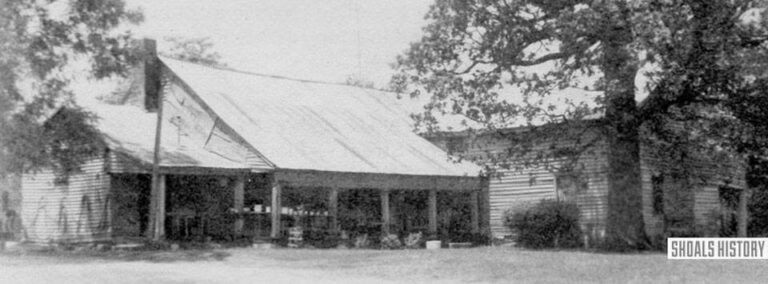
Colbert was among the most influential Chickasaw leaders of his generation. His family’s ferry along the Natchez Trace was an important crossing of the Tennessee River, and his name remains associated with Colbert County and several local landmarks.
Although the Chickasaw were themselves facing increasing pressure to surrender their homelands, some prominent Chickasaw families also enslaved African Americans. Elvira was among those held in bondage.
During the 1830s, the federal government’s Indian Removal policy forced the Chickasaw and other southeastern Native American nations to relocate west of the Mississippi River. Enslaved African Americans belonging to Chickasaw households were taken west with them.
Taken West with the Chickasaw
After leaving the Shoals region, Elvira continued living in slavery under George Colbert at his ferry on the Red River in Indian Territory.
Following Colbert’s death, she passed into the household of his daughter Susan, who had married a man named Jones. Elvira recalled moving first to Skullyville and later to Rose Hill, near Doaksville, both settlements associated with the Choctaw Nation. She remained enslaved by the Jones family until emancipation following the Civil War.
Her recollections provide a rare firsthand connection between slavery in the Tennessee Valley, Native American removal, and the experiences of African Americans held in bondage within Indian Territory.
A New Life After Emancipation
After gaining her freedom, Elvira eventually settled near Shawneetown in present-day McCurtain County, Oklahoma. By 1917, she owned 20 acres of land, which her grandson cultivated while helping care for her. She had given birth to six children, but tragically, all six had died before her interview.
When asked about her family, she explained that she still had six grandchildren, including a 22-year-old grandson who lived with her. Although Elvira could not recall her exact age, she believed she was approximately 100 years old. The reporter described her as remarkably alert and active despite her advanced years.
Remembering a Century of Change
Captain Ray first encountered Elvira in Idabel, Oklahoma, where she had come to testify in a lawsuit. Intrigued by her age, he later visited her home. He found her sitting on the porch shelling corn. Inside her modest two-room house, Elvira showed him an enlarged portrait made from an old tintype photograph. She could no longer remember when the original picture had been taken.
Ray was particularly impressed by the cleanliness of her home and her ability to remember events from long before the Civil War. Unfortunately, the newspaper account ended with a sad update. Shortly after the interview, Elvira’s house and its contents were destroyed by fire while she was visiting a neighbor.
Bibliography
- Ray, Captain W. S. “Elvira Shoals.” McCurtain Gazette (Idabel, Oklahoma), January 13, 1917. Transcription reproduced by the National Park Service in “Elvira Shoals — Enslaved to Free.” https://www.nps.gov/people/elvira-shoals.htm
- National Park Service. “Elvira Shoals — Enslaved to Free.” Natchez Trace Parkway, last updated February 13, 2023. https://www.nps.gov/people/elvira-shoals.htm
- National Park Service. Choctaw and Chickasaw Removal. Natchez Trace Parkway historical publication. https://www.govinfo.gov/content/pkg/GOVPUB-I29-PURL-gpo76377/pdf/GOVPUB-I29-PURL-gpo76377.pdf
- United States Government. Treaty with the Chickasaw, 1818. Reproduced by Yale Law School, Avalon Project. https://avalon.law.yale.edu/19th_century/nt006.asp
- National Park Service. An Ethnohistory of the Relationship Between the Chickasaw and the Land. Chickasaw National Recreation Area historical study. https://www.nps.gov/parkhistory/online_books/chic/ethno.pdf