
In early 1889, Florence postmaster Bessie McAlester traveled all the way to Indianapolis with a rather unusual mission: convince President-elect Benjamin Harrison, a Republican, to let her, a Democrat, keep her job. And according to the newspapers, she wasn’t shy about it.
McAlester had become postmaster of Florence only two years earlier, following the death of her father, John W. McAlester. Federal records show that she was nominated to replace her deceased father, and later Post Office Department records give her term as February 1, 1887, through October 31, 1889.
In doing so, McAlester became Florence’s first female postmaster.
Taking Over Her Father’s Post Office
Bessie’s father had been appointed postmaster of Florence during the administration of Democratic President Grover Cleveland, but according to contemporary newspaper accounts, he held the position for only a few weeks before his death. His daughter succeeded him.
A newspaper article published while Bessie was visiting Indianapolis in February 1889 reported that friends of her father had successfully pushed for his “pretty daughter” to receive the appointment. It also said that she had since administered the Florence post office “to the complete satisfaction” of the people.
The official record confirms the basic story. In January 1887, Bessie McAllister (the spelling of her name varies considerably among contemporary sources) was nominated as postmaster of Florence “in the place of John W. McAlester, deceased.” She soon found herself running a post office in a rapidly growing Florence.
An Important Job in a Growing Town
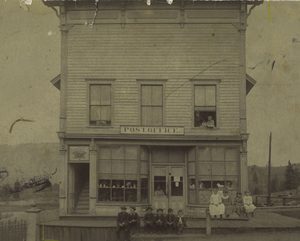
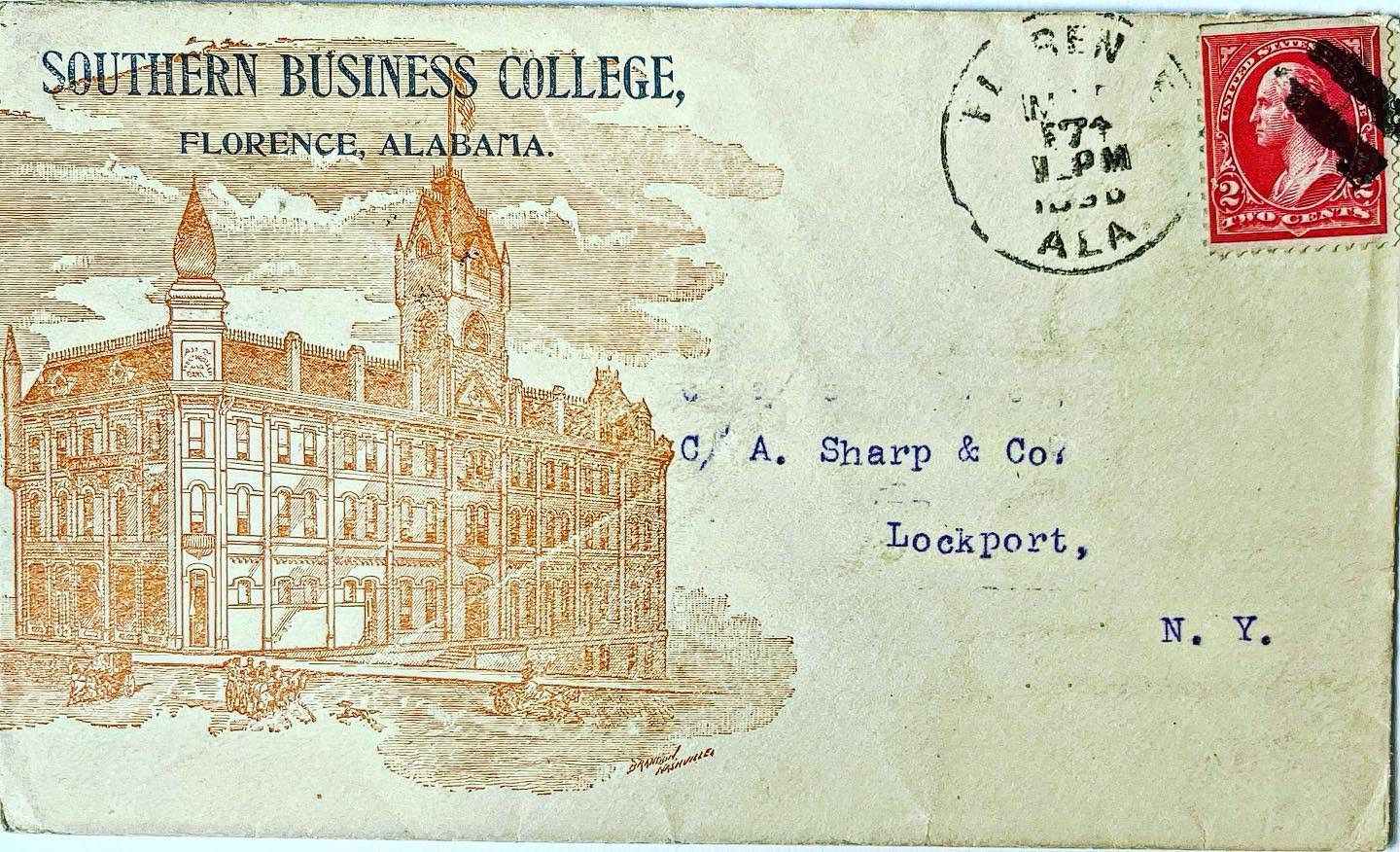
Being postmaster in the 1880s was an important position, particularly in a growing town like Florence. Long before email, telephones in every home, or overnight delivery services, the local post office was one of a community’s primary connections to the rest of the country.
The postmaster was responsible for overseeing the receipt, sorting and distribution of mail, supervising postal employees, maintaining the post office and handling the money and records associated with its operation. In Florence, Bessie also had to manage the practical demands of a rapidly expanding office; hiring clerks, providing enough post-office boxes and making sure the increasing volume of mail was handled properly.
The position also carried a degree of local prominence. Postmasters were federal officials, and appointments were often tied closely to national politics. A change of presidential administration could mean a change behind the counter at the local post office, particularly when the incoming president belonged to a different political party.
That was precisely the situation Bessie faced in 1889. She was a Democrat appointed during the administration of Grover Cleveland. When Republican Benjamin Harrison defeated Cleveland in the 1888 election, Bessie had good reason to wonder whether she would still have a job.
“I Work Constantly Myself”
Bessie’s tenure happened to coincide with Florence’s late-1880s boom, and the growth of the city appears plainly in the records of its post office.
In January 1889, Bessie wrote directly to the Postmaster General asking for help. Mail volume had increased so much during the previous two months that she was employing three clerks, largely at her own expense:
“I write to you to help me immediately out of my trouble.”
She explained that she had recently doubled the number of post-office boxes and already needed to order more. The expenses were coming out of her own pocket, she said, and were forcing her into debt.
Perhaps the most telling line was a simple one:
“I work constantly myself.”
Her federal allowance for clerk hire amounted to only $12.50 per month. She worried that without additional help, the Florence post office could not be operated as it should.
The numbers support her complaint. Post Office Department records later showed receipts at the Florence office increasing from $3,686 for the four quarters ending March 31, 1888, to $5,064 the following year, and eventually $8,128 for the four quarters ending in March 1890.
Bessie also faced another problem. A Republican was about to become President.
A Democrat Goes to See Benjamin Harrison
Democrat Grover Cleveland lost the 1888 presidential election to Republican Benjamin Harrison. In an era when postmaster appointments were closely connected to politics and presidential administrations, that placed Bessie’s job in jeopardy. So she went to Indianapolis to make her case personally.
On February 9, 1889, New York’s Evening World ran the headline:
“GEN. HARRISON’S FAIR VISITOR.”
Underneath was the rather wonderful subheading:
“She Is a Democrat but Thinks He Is Real Mean If He Does Not Reappoint Her.”
The newspaper described Bessie as one of the more interesting people calling upon the President-elect. She apparently didn’t come right out and ask Harrison for another appointment. Instead, she told him that she hoped the incoming President wouldn’t “turn all the rascals out.”
According to the paper, Harrison laughed.
There was certainly no attempt to convince him that she had suddenly become a Republican.
The Evening World reported that Bessie came from a thoroughly Democratic family and that she “wouldn’t be anything else.” She also had her own interpretation of the much-discussed issue of civil-service reform:
“Civil service reform,” she says, “means that the victorious party shall have all the offices.”
Someone apparently advised her that emphasizing this particular opinion while asking a Republican President to reappoint her might not be the strongest strategy. Bessie wasn’t especially concerned.
The Florence post office, she replied, was such a “little thing” and she wanted it so badly that surely Harrison could overlook her politics. Then came the line that made the newspaper’s headline:
“I think he is real mean if he does not.”
Another newspaper covering the visit was even more blunt in its headline:
“PRETTY BESSIE ALLISTER — Though an Awful Democrat, Wants to Retain Her Office of Postmistress at Florence, Ala.”
That account reported essentially the same story: Bessie knew perfectly well that she was an “awful Democrat,” but intended to ask Harrison directly whether she could remain postmaster.
Harrison Didn’t Reappoint Her
Charm and persistence only carried the argument so far. Federal records show Bessie remained postmaster until October 31, 1889.
Her life was changing in other ways as well. Lauderdale County marriage records show that Bessie McAlester married John A. McQuirk on April 24, 1889, just a little more than two months after her trip to Indianapolis. Her name consequently appears in later federal records as Bessie McAlester McGuirk.
And her dealings with the federal government weren’t quite finished.
Bessie’s Fight With the Post Office Continued
Nearly a decade later, Bessie’s old Florence post-office expenses reached the United States Congress.
A bill was introduced seeking financial relief for Bessie McAlester McGuirk, apparently connected to money she believed she was owed from her time as postmaster. In 1898, the House Committee on the Post-Office and Post-Roads reviewed her case and recommended that the bill be laid on the table.
The Post Office Department maintained that her $150 annual clerk allowance had been sufficient under the law. It did, however, acknowledge that she had not been properly reimbursed for rent, fuel and light during one quarter of 1888.
The amount the department concluded she was legitimately owed? $23.75.
It was a small amount, but the congressional investigation preserved something much more valuable: Bessie’s own 1889 letter describing what it was actually like to operate Florence’s post office during one of the fastest-growing periods in the city’s history.
Florence’s First Female Postmaster
Bessie McAlester’s tenure lasted less than three years, but her story offers a glimpse into both Florence during the boom years and the intensely political world of the 19th-century postal service.
She inherited an office after the sudden death of her father. She managed it while its business expanded rapidly. When the political winds changed in Washington, she traveled hundreds of miles to personally plead her case to the incoming President of the United States. She even told the newspapers exactly what she thought of him if he didn’t give her the job.
For a woman holding a federal appointment in Florence, Alabama, in the 1880s, that’s a pretty remarkable story. And although Benjamin Harrison ultimately did not keep Bessie McAlester in office, history did: she is remembered as Florence’s first female postmaster.