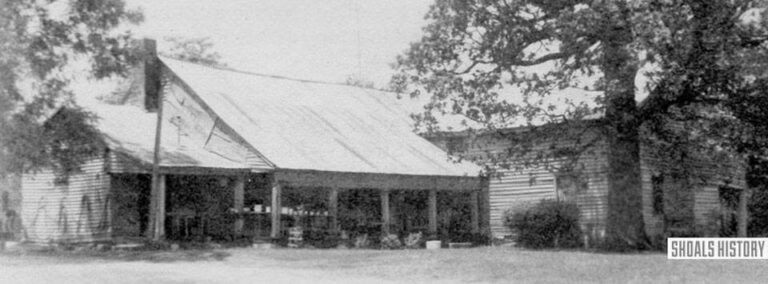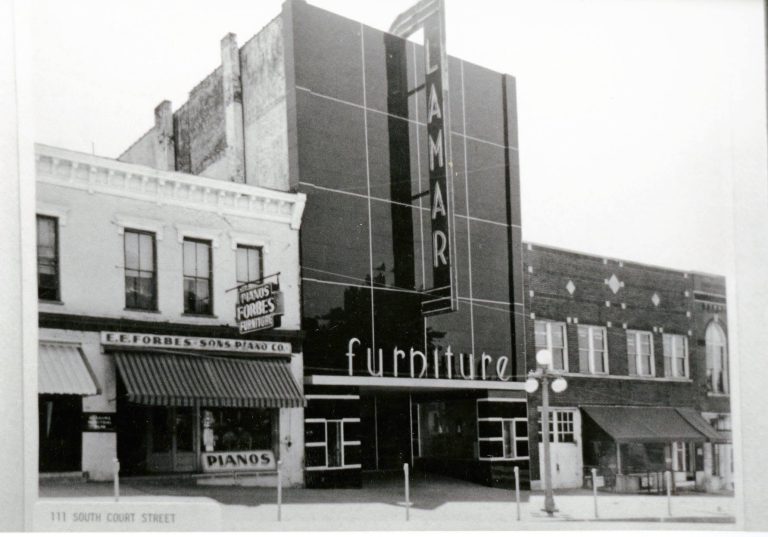

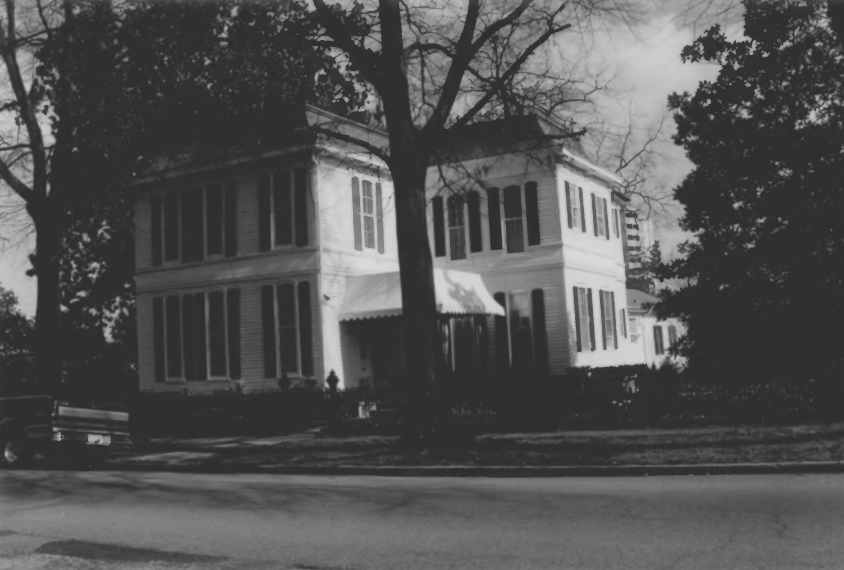
At 221 West Tuscaloosa Street in Florence, Alabama, stands one of downtown Florence’s more unusual historic homes. Known as Thimbelton, the house dates to around 1830, but the building we see today looks considerably different from the one that stood here nearly 200 years ago.
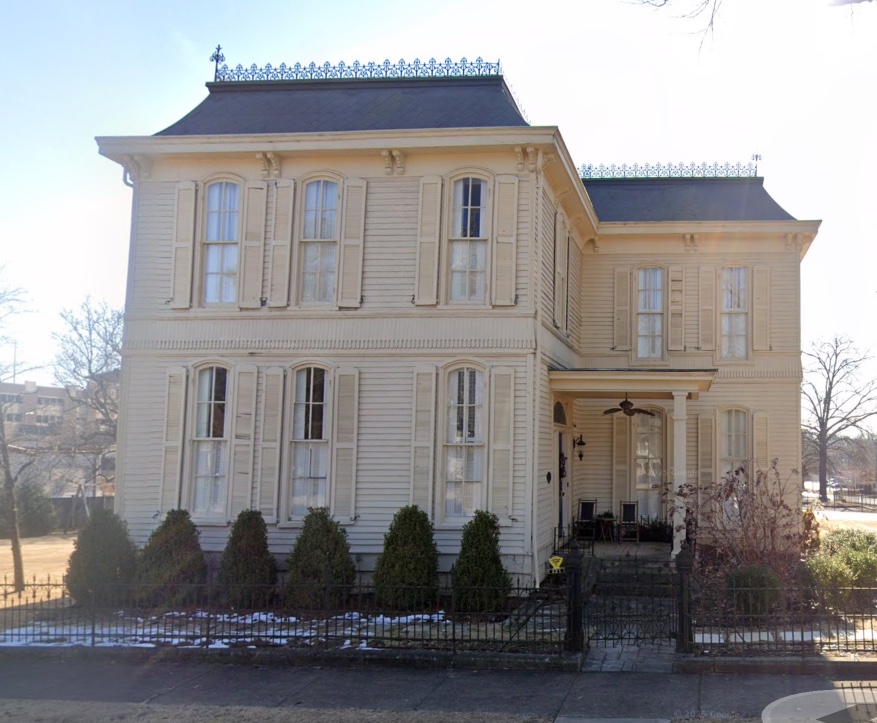
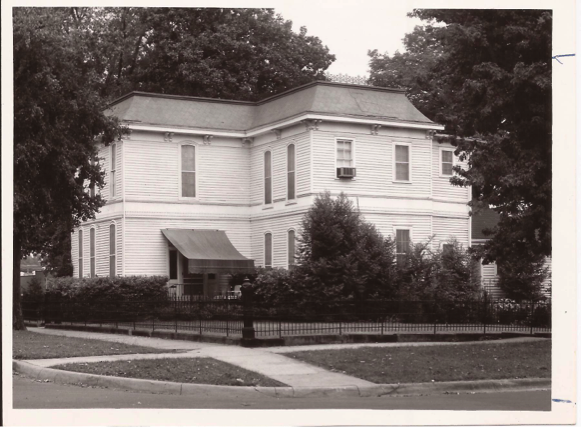
Thimbelton began as a relatively simple two-story frame house. During the 1870s, however, the home was extensively remodeled and given the elaborate appearance it retains today. The renovation introduced elements of the fashionable Second Empire and Italianate architectural styles, including its distinctive false mansard roof, decorative brackets, tall windows, and ornate ironwork.
Today, Thimbelton is part of Florence’s Locust Street Historic District, surrounded by other homes that help tell the story of the city’s growth during the 19th century.
Who Built Thimbelton?
Exactly who originally built Thimbelton remains something of a mystery.
The house has been associated with Ferdinand Sannoner, the surveyor who laid out the original town of Florence and is traditionally credited with giving the city its name. Sannoner was involved with a number of early properties in Florence, but the exact extent of his involvement with Thimbelton is less clear.
By 1839, the property had passed to Thomas Kirkman, another name connected to several important places in local history.
Kirkman would soon become associated with an even better-known Lauderdale County landmark. Following the death of James Jackson in 1840, Kirkman inherited the Forks of Cypress, Jackson’s massive plantation northwest of Florence.
Thimbelton would change hands several more times as Florence grew during the 19th century.
The Campbell and O’Neal Families
In 1881, the property was acquired by William P. Campbell, who served as treasurer of the Florence Land Company.
That connection is particularly interesting considering what was happening in Florence at the time. During the 1880s, land companies, investors, railroads, and industrial promoters were transforming Florence and neighboring Sheffield. The quiet river town of earlier decades was entering one of the greatest periods of speculation and development in its history.
The property later passed through Campbell’s widow, Mary Coffee O’Neal, eventually becoming associated with the O’Neal family.
One of its later owners was Edward A. O’Neal III, who inherited Thimbelton.
O’Neal became a nationally prominent agricultural leader and served as president of the American Farm Bureau Federation during Franklin D. Roosevelt’s administration. His ownership gave this old Florence house a connection to agricultural and political developments occurring far beyond the Tennessee Valley.
The House Gets a New Look
Perhaps the most interesting part of Thimbelton’s story is that its distinctive appearance is not original.
The house constructed around 1830 would have looked much simpler.
During the 1870s, it underwent a major remodeling influenced by architectural styles that had become fashionable after the Civil War. The most obvious addition was the false mansard roof across the front of the house.
A true mansard roof slopes downward on all sides and normally creates usable living space within the upper portion of a building. Thimbelton’s roof is largely decorative. From behind the house, its true construction becomes much easier to see.
Even more striking is the elaborate iron cresting running along the roofline.
Other details include wide overhanging eaves supported by decorative brackets, tall narrow windows topped by segmental arches, and an open iron balustrade.
These features show the influence of both Second Empire and Italianate architecture, styles that became popular across the United States during the middle and later decades of the 19th century.
The result was a dramatic transformation.
What had begun as an early Florence frame house became one of the city’s most recognizable Victorian-era residences.
Where Did the Name “Thimbelton” Come From?
According to local tradition, Thimbelton takes its name from a tailor shop believed to have once occupied the property or stood nearby. The name apparently survived long after the business itself disappeared.
Whether every detail of that story can still be documented is another question, but the name has become permanently attached to the house. And perhaps that is fitting. Thimbelton is really several periods of Florence history wrapped into one building.
Its original construction dates to the city’s earliest decades. Its later owners connect it with some of the better-known families and properties of Lauderdale County. Its elaborate remodeling reflects the changing tastes and growing prosperity of Florence during the second half of the 19th century.
Nearly two centuries after the first house was built on the property, Thimbelton still stands on West Tuscaloosa Street, preserving pieces of several different eras of Florence history within the same walls.