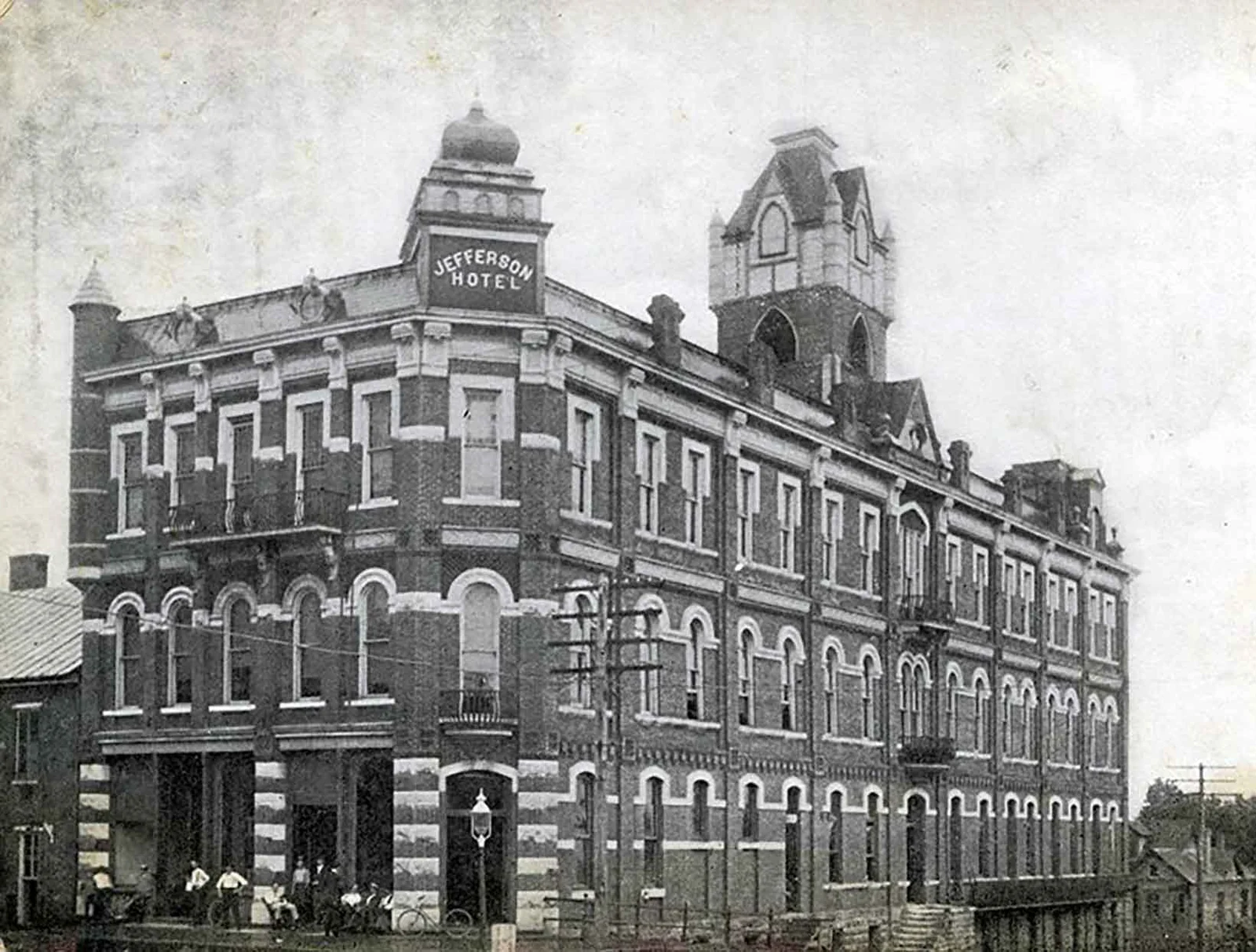

Today, we delve into the fascinating, but ultimately tragic tale of the Jefferson Hotel, once a prominent landmark in Florence, Alabama.
From City Hall to Grand Hotel (1903-1923)
In 1903, the Florence City Council embarked on a unique venture. They decided to sell the city hall building for a remarkable sum of $10,000. The buyers, R. Lee Glenn and Mason J. Dillard, envisioned a grand transformation – the city hall would become a majestic hotel!
The conditions of the sale were clear: the building had to be converted into a hotel within 60 days and be operational by 1904. Additionally, the new owners were required to invest at least $5,000 in improvements and furnishings. Failure to meet these conditions would result in a hefty penalty for the buyers.
Thus, the Jefferson Hotel was born. Gus Norton, an experienced hotelier, was appointed the first manager, followed by C.W. Negley in 1905. The Jefferson quickly became the crown jewel of Florence’s hospitality scene, welcoming guests and serving as a hub for social gatherings.
A Devastating End (1923)
Sadly, the Jefferson Hotel’s story took a tragic turn in April 1923. A fire, ignited by an explosion in the basement’s dry cleaning establishment, engulfed the entire building. This devastating event, witnessed by a large crowd, left the grand hotel in ashes. The fire spread rapidly, defying the valiant efforts of firefighters from Florence, Sheffield, and even the nearby Nitrate Plant.
A Phoenix, (Almost): The Hotel Negley (1925-1966)
Just days before the fire, C.W. Negley, a former manager of the Jefferson Hotel, had purchased the very hotel he once oversaw. Undeterred by the tragedy, Negley decided to rebuild on the same site. The phoenix rose from the ashes in the form of the Hotel Negley, which opened its doors in 1925. While the Hotel Negley carried the torch for some time, it eventually met its own fate and was demolished in 1966.
Though the Jefferson Hotel no longer stands, its story serves as a reminder of Florence’s vibrant past and the city’s spirit of resilience. The grand dame of hospitality may be gone, but its legacy lives on in the collective memory of Florence.