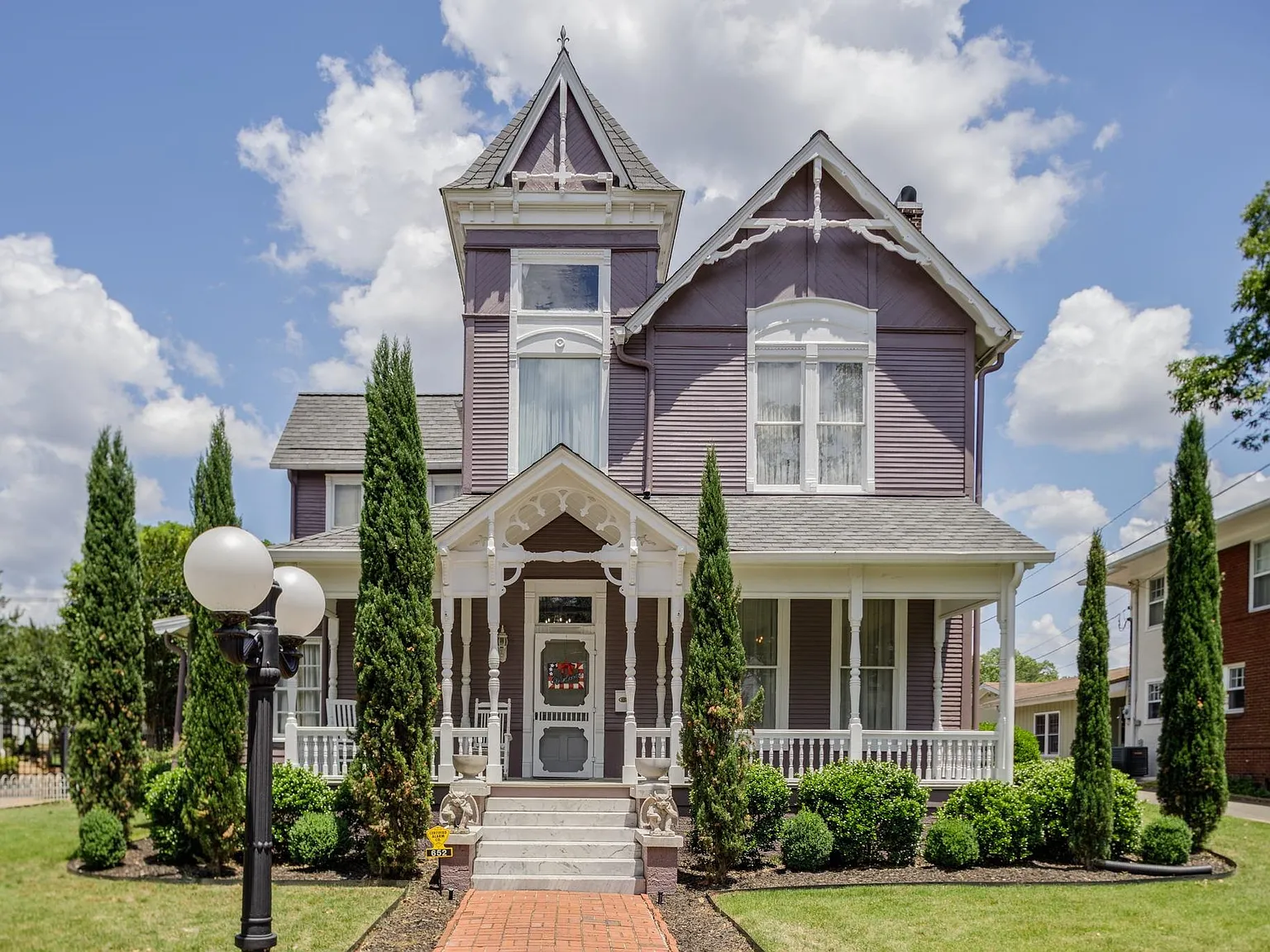

At 652 North Wood Avenue in Florence, Alabama, stands one of the city’s finest surviving examples of Queen Anne architecture. Built around 1900 for John Hall, the Hall-Westmoreland-Colburn House dates from a period when Florence was expanding and some of the city’s prominent merchants, professionals and landowners were building impressive new homes.
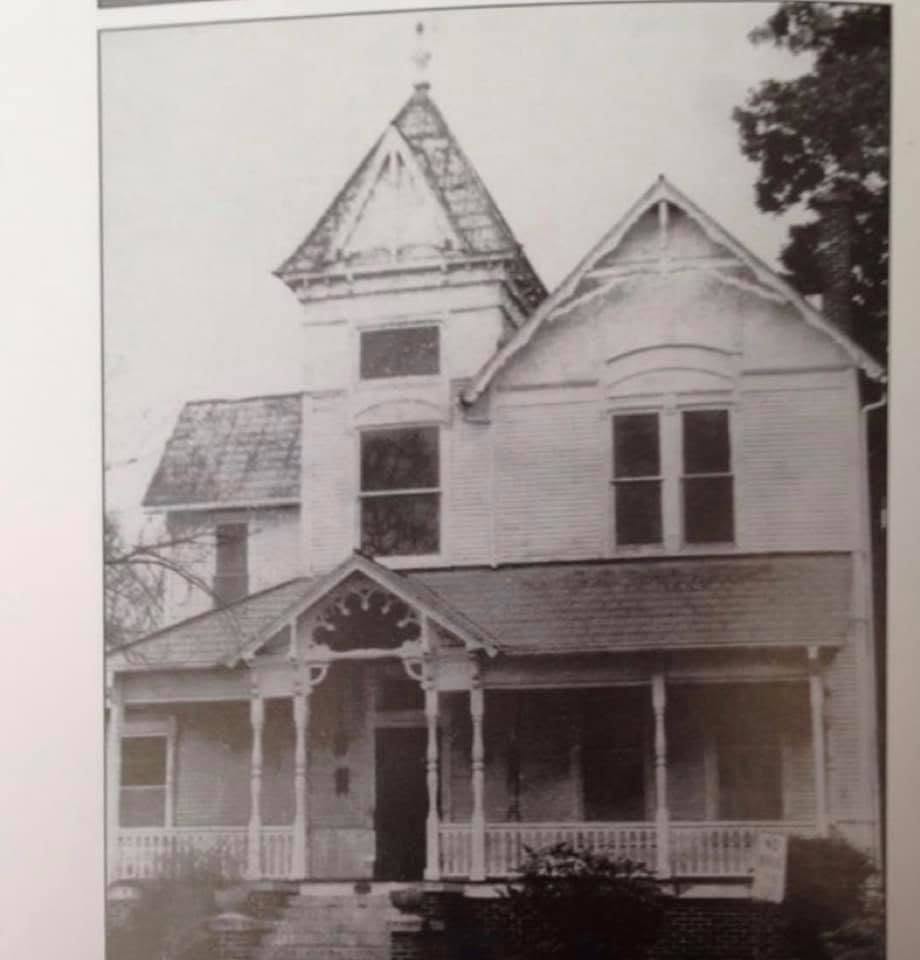
Florence Moves Toward Wood Avenue
By the late 19th century, Florence was changing rapidly. The industrial boom of the 1880s brought new businesses, investment and population to the city. But as Florence’s upper and middle classes grew, much of the city’s established fashionable residential area had already been developed.
Wood Avenue became one of the places where Florence’s prosperous merchants, landowners and professionals built their homes. The result was a remarkable collection of Victorian houses constructed primarily during the final decades of the 19th century.
When the Wood Avenue Historic District was documented for the National Register of Historic Places in 1978, fourteen structures dating between 1874 and 1900 remained to illustrate this period of Florence’s development.
Among the most elaborate were the Smith House, Reisman-Coffee-Looft House and the Hall-Westmoreland-Colburn House.
Hall-Westmoreland-Colburn House: Built for John Hall
Historic records identify John Hall as the original owner for whom the house was constructed around 1900. The property eventually became associated with the Westmoreland and Colburn families, giving the house the name by which preservationists identify it today: the Hall-Westmoreland-Colburn House.
An Alabama historic resources inventory describes the property as a circa-1900 dwelling originally constructed for Hall and specifically notes its detailed woodwork and distinctive tower. The property was also listed on the Alabama Register of Landmarks and Heritage.
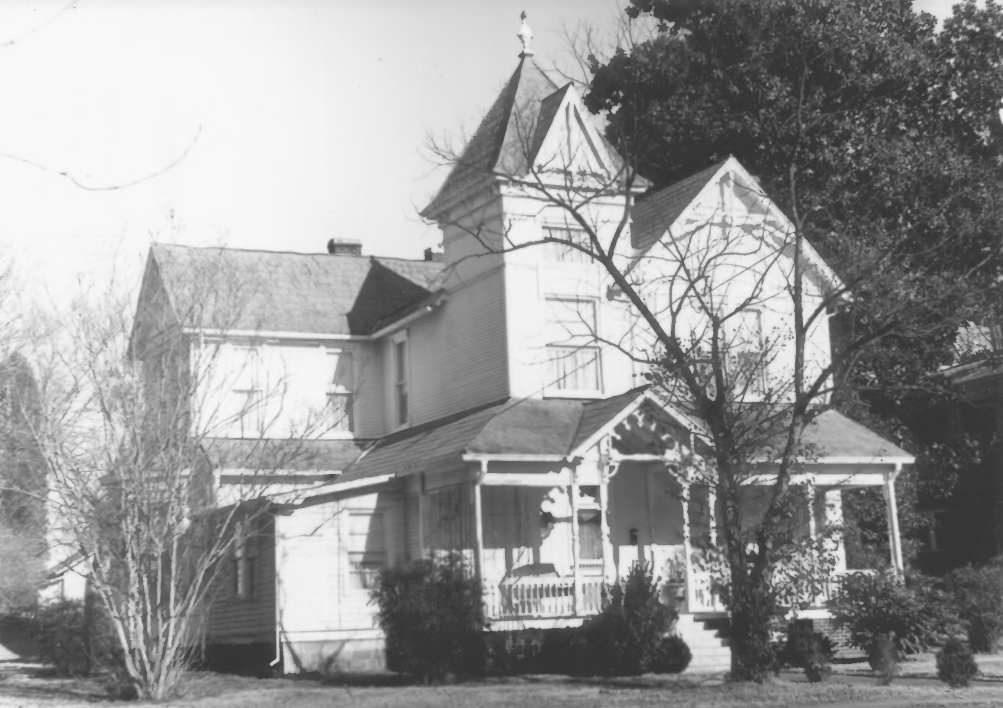
Interestingly, the official 1978 photographs prepared for the Wood Avenue Historic District identify the property as the Hall-Westmoreland-Colburn House and indicate that Eud L. Colburn was associated with the home at that time.
A Classic Queen Anne House
Architecturally, the house is a wonderful example of the Queen Anne style popular during the late Victorian period. Queen Anne architecture was almost the opposite of restrained. Builders embraced asymmetry, towers, porches, projecting rooms, complicated rooflines and decorative woodwork. The idea was to create visual interest rather than make every side of a house perfectly balanced.
The Hall-Westmoreland-Colburn House certainly accomplished that.
Standing two and a half stories tall, the weatherboard house has a complicated multi-gabled roofline dominated by a square tower topped with a pyramidal roof.
Across roughly three-quarters of the front of the house is a porch decorated with moderate Eastlake-style trim. Eastlake ornamentation was especially popular during the Victorian era and typically incorporated decorative turned or cut wooden elements into porches, railings and other architectural features.
The combination of the tower, gables, porch and decorative woodwork gives the house the irregular silhouette that makes Queen Anne architecture so recognizable.
One House in a Remarkable Neighborhood
What makes the Hall-Westmoreland-Colburn House especially interesting is that it does not stand alone. A walk down this section of North Wood Avenue is almost a lesson in Florence’s architectural history.
Nearby stands the Smith House, another two-and-a-half-story Queen Anne residence dating to about 1889. Just a few houses south is the Wood-Robinson House, constructed around 1845. Farther along is the Reisman-Coffee-Looft House, another elaborate Queen Anne residence dating to around 1890.
Some were built before the Civil War. Others appeared during Florence’s late-19th-century boom. Still others arrived as bungalows and revival-style houses became fashionable during the early decades of the 20th century. Few streets in Florence preserve that progression as clearly as Wood Avenue.
Preserving Wood Avenue
Recognizing its architectural and historical importance, the Wood Avenue Historic District was added to the National Register of Historic Places on October 9, 1978.
The Hall-Westmoreland-Colburn House was included as one of the district’s contributing historic properties. The original National Register survey specifically highlighted it as one of the elaborate Queen Anne homes constructed by the city’s prominent merchants and landholders during Florence’s period of expansion.
The house had also received recognition at the state level through its listing on the Alabama Register. A recognition that helped document something Florence residents could already see simply by walking down the street: Wood Avenue contained one of the city’s most significant collections of historic residential architecture.
Hall-Westmoreland-Colburn House is More Than an Old House
Today, it is easy to admire the Hall-Westmoreland-Colburn House simply for its architecture.
The tower immediately catches your eye. Then come the gables, porch, decorative trim and all of the smaller details that Victorian builders used to make houses like this anything but ordinary.
When John Hall built his home here around 1900, Wood Avenue was part of a Florence that had spent the previous several decades growing beyond its earlier boundaries. Families with the means to construct substantial new residences were establishing a new fashionable neighborhood east of the older portions of town.
More than 125 years later, it still stands at 652 North Wood Avenue, surrounded by other houses from several generations of Florence history.